

Kia Philippines introduced the all-new Kia EV3 at Ayala Museum, bringing its internationally recognized electric SUV to the local market with a combination of contemporary design, electric performance, advanced cabin technology, and features intended for everyday driving.
The launch marks another development in Kia Philippines’ electric vehicle lineup under ACMobility, Ayala Corporation’s mobility solutions platform. Recognized as the 2025 World Car of the Year, the EV3 arrives with international design accolades and specifications that position it as a compact electric SUV for motorists looking to make the transition to electric mobility.
The vehicle draws inspiration from Kia’s larger electric models, the EV5 and EV9, bringing elements of their design and technology into a smaller package. Its introduction reflects the company’s effort to make electric driving a more practical consideration for consumers who want the functionality of an SUV alongside the benefits of an electric powertrain.
For Kia Philippines Managing Director Jay Lopez, the EV3 is intended to offer more than a different source of propulsion. Its features are designed to support the needs of drivers who want modern technology and everyday convenience in a single vehicle.
“Our goal is to make electric driving a natural upgrade to daily life,” Lopez said. “The Kia EV3 pairs world-class technology with daily utility, giving drivers a quieter, smarter, and more comfortable way to experience the future of mobility.”
With its combination of a claimed driving range of up to 511 kilometers, a technology-focused cabin, and a comprehensive list of driver-assistance features, the EV3 enters the Philippine market with an emphasis on making electric mobility relevant to everyday routines.
The EV3’s introduction in the Philippines comes with a significant international distinction: the model was named 2025 World Car of the Year. The award recognizes automotive achievements through the evaluations of international automotive journalists, with considerations that include design, safety, and innovation.
The vehicle has also received Red Dot “Best of the Best” and iF Design recognition, adding to its international design credentials.
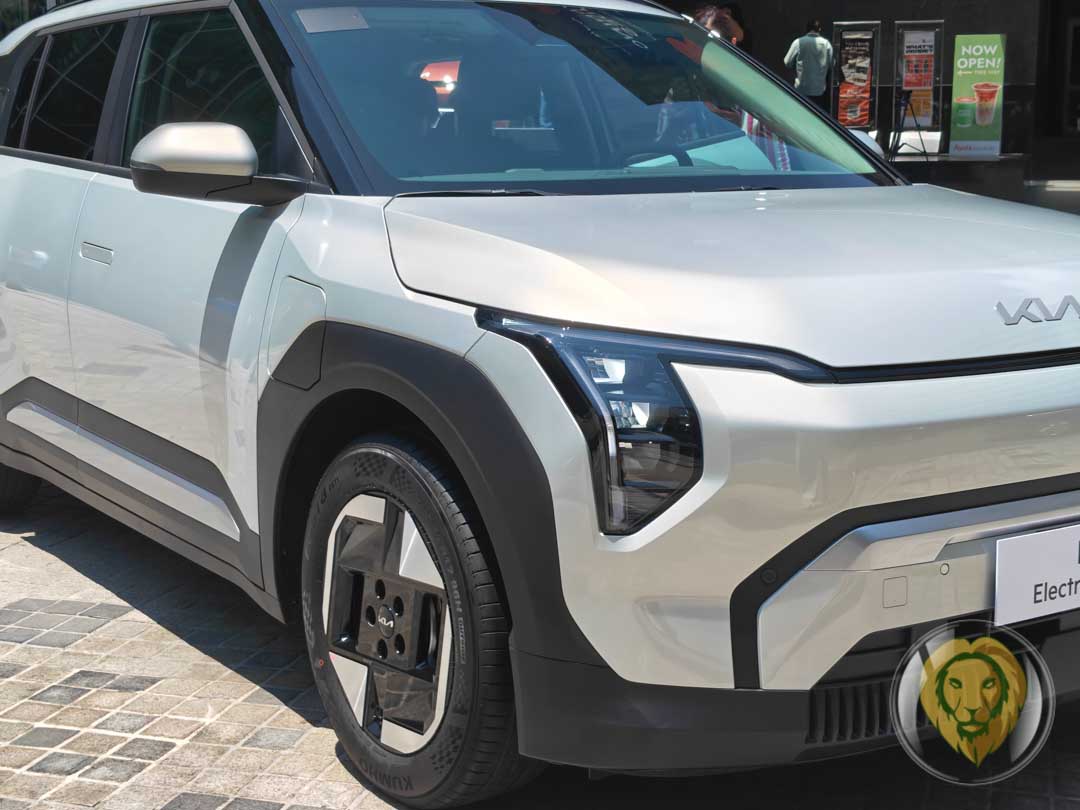
Its exterior follows Kia’s current electric vehicle design direction, combining geometric forms with a distinctive front fascia and details intended to support aerodynamic efficiency.
The EV3 features an evolved Digital Tiger Face framed by signature LED headlights. The front design gives the SUV a recognizable identity, while its sculpted surfaces and futuristic proportions distinguish it within the compact SUV segment.
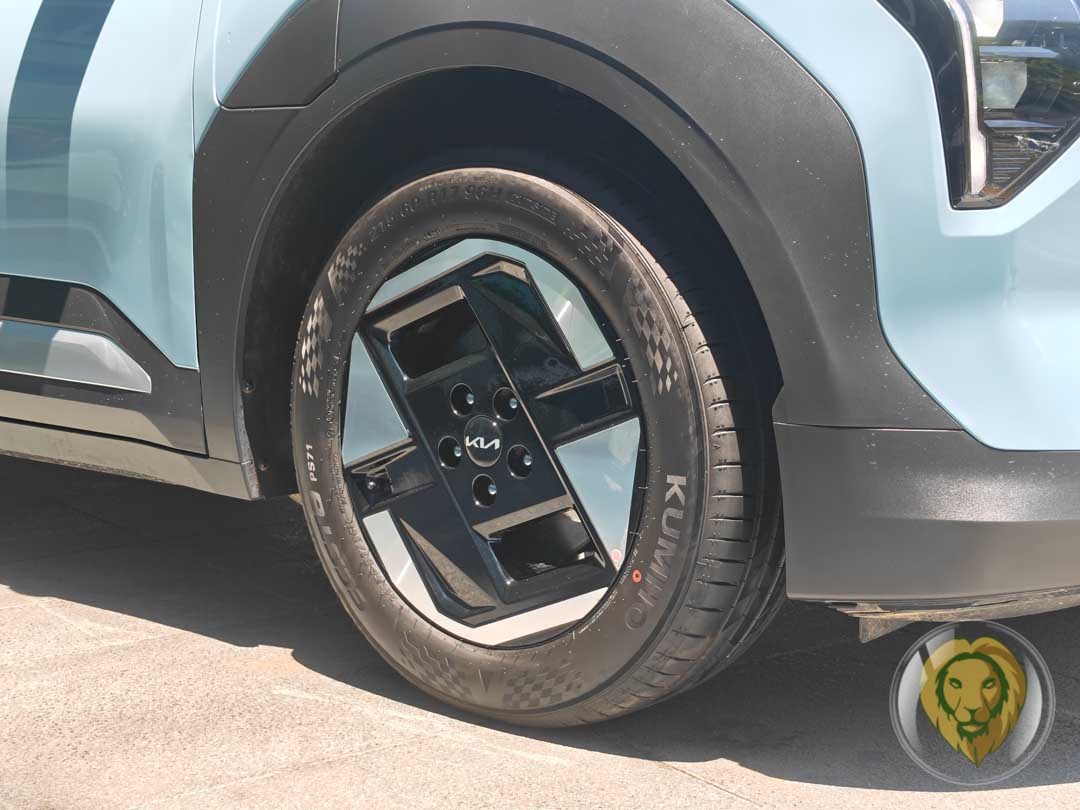
Other exterior features include flush outer door handles, a rear spoiler, standard roof rails, and 17-inch alloy wheels. These elements combine styling with practical considerations, giving the vehicle a contemporary appearance while retaining familiar SUV characteristics.
The design approach is consistent with Kia’s broader electric vehicle strategy, which brings a shared visual identity across models of different sizes. By carrying elements associated with the larger EV5 and EV9 into the EV3, Kia gives the compact SUV a place within the same design family without making it a direct copy of its bigger counterparts.
The EV3 is offered in seven exterior colors: Aventurine Green, Snow White Pearl, Aurora Black, Terra Cotta, Frost Blue, Shale Grey, and Ivory Silver.
The available finishes provide prospective buyers with different styling options, while the vehicle’s compact SUV form makes it an alternative for motorists who may want an electric vehicle without moving into a larger body category.
Under the hood—or, more precisely, beneath the vehicle’s electric powertrain configuration—the Kia EV3 uses a front-mounted Permanent Magnet Synchronous Motor that produces 204 PS and 283 Nm of torque.
The motor is paired with a 58.3 kWh lithium-ion battery pack. Kia Philippines cites a driving range of up to 511 kilometers on a single charge under the New European Driving Cycle (NEDC).
That range figure is one of the vehicle’s key selling points, particularly for drivers considering how an electric SUV could fit into their daily travel. It provides a reference for assessing potential journeys between charges, although real-world range will vary depending on driving style, road conditions, weather, climate-control use, and other factors.
Charging flexibility is another part of the EV3’s package. According to Kia Philippines, charging from 10 to 80 percent takes approximately five hours and 20 minutes using an 11 kW AC charger. With a 350 kW DC fast charger, the same charging interval takes approximately 29 minutes.
The two figures illustrate the difference between the listed AC and DC charging times. AC charging can be considered for longer periods when the vehicle is parked, while DC fast charging can reduce the time required to replenish the battery during a stop. Actual charging performance will depend on the available charging equipment and conditions.
For prospective EV owners, the charging specifications provide important information to consider alongside the vehicle’s range. Access to suitable charging facilities and the owner’s driving patterns will influence how convenient an electric vehicle can be in practice.
Kia’s stated goal is to make electric driving a natural part of everyday life. The EV3’s powertrain and charging capabilities form part of that proposition, pairing the performance expected of a modern electric vehicle with a range intended to accommodate a variety of journeys.
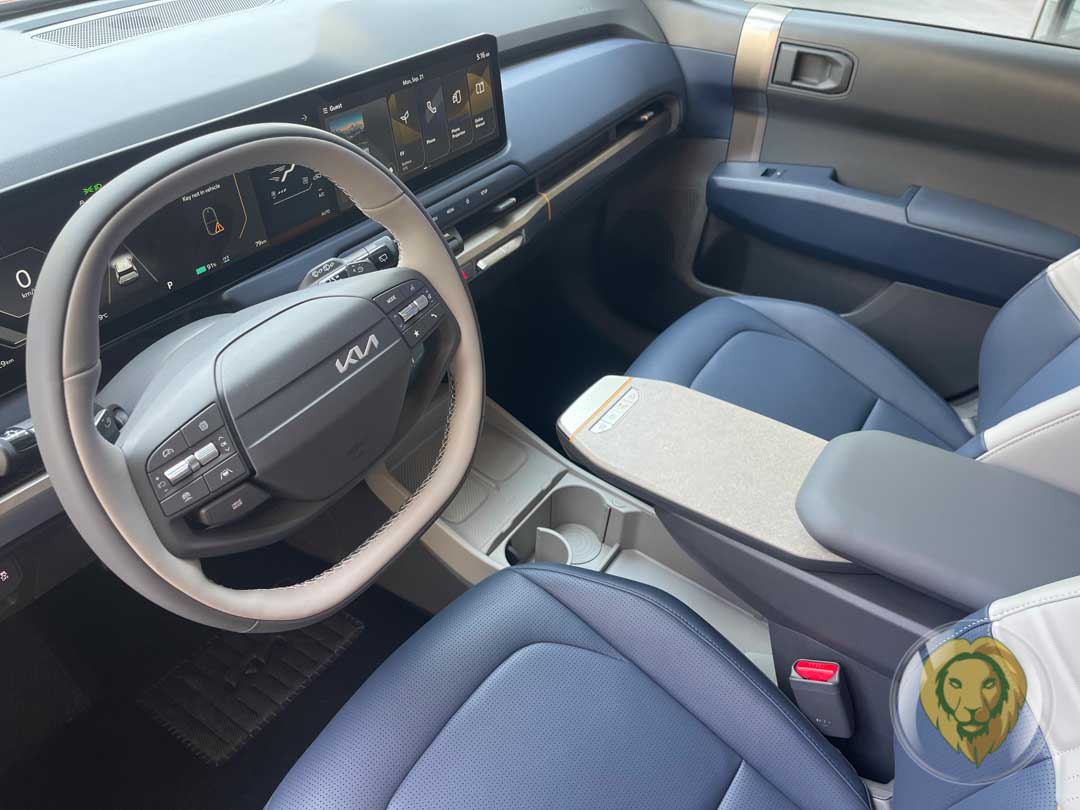
Inside, the Kia EV3 brings together a broad digital display, smartphone connectivity, and practical features intended to make the cabin functional for drivers and passengers.
The dashboard is anchored by Kia’s 30-inch Triple Panoramic display, which combines the instrument cluster, infotainment display, and a separate 5.3-inch climate-control display.
The arrangement brings several functions into a connected dashboard layout, giving the driver access to key vehicle information and infotainment features while keeping climate settings within the same overall display area.
Wireless Apple CarPlay and Android Auto are standard, allowing compatible smartphones to connect without a cable. The EV3 also comes with two wireless charging pads and five USB-C charging ports, providing several options for keeping devices powered while on the road.
A six-speaker audio system completes the listed standard connectivity and entertainment features.
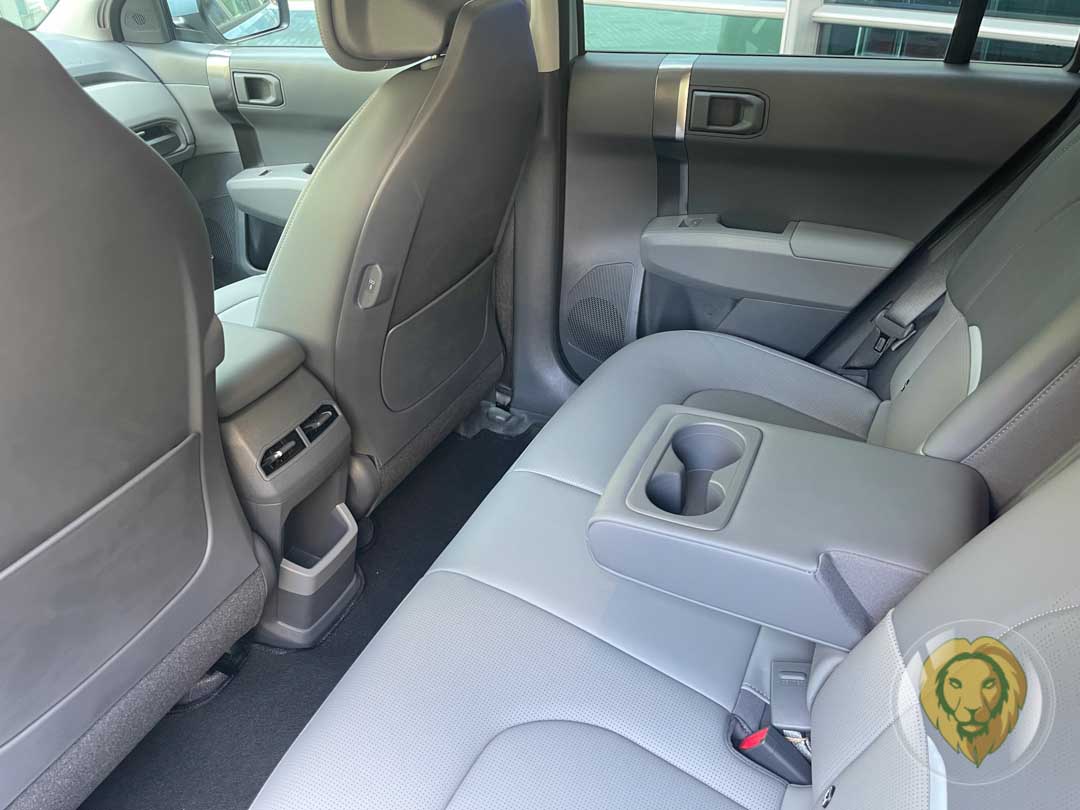
The cabin’s equipment also includes leather upholstery, an eight-way power-adjustable driver’s seat with power lumbar support, and dual-zone automatic climate control.
The power-adjustable seat allows drivers to tailor their seating position, while lumbar support provides an additional adjustment for the lower back. Dual-zone climate control allows the driver and front passenger to select separate temperature settings.
These features reflect the EV3’s focus on comfort as well as technology. The vehicle’s appeal is not limited to its electric powertrain or dashboard displays; it also includes the details that can shape the experience of spending time behind the wheel.
Beyond its digital equipment, the EV3 includes features designed to make the interior adaptable to different uses.
An innovative sliding console tray provides flexible workspace or storage options, offering an additional way to organize items inside the cabin. The feature complements the vehicle’s technology-oriented dashboard with a practical storage solution.
At the rear, the 60:40 split-folding seats allow the available cabin space to be rearranged depending on passenger and cargo requirements. Folding the seats in sections can provide additional flexibility when carrying larger items while retaining seating space for other passengers.
These features support the EV3’s positioning as an everyday compact SUV. Its interior combines passenger-oriented equipment with practical details that can be useful across different driving situations.
For buyers weighing an electric vehicle against a conventional SUV, cabin functionality is an important consideration alongside range and charging access. The EV3’s combination of adjustable seating, storage flexibility, connectivity, and split-folding rear seats gives the model a range of features intended to support daily use.
Safety equipment is another major component of the EV3’s specification.
The vehicle features Kia DriveWise, a suite of driver-assistance technologies that includes Advanced Smart Cruise Control, Forward Collision Avoidance with Autonomous Emergency Braking, Lane Keeping Assist, Lane Following Assist, Blindspot Safety Warning, and Rear Cross Traffic Safety.
These systems address different driving situations. Advanced Smart Cruise Control assists with maintaining a set following distance, while Forward Collision Avoidance with Autonomous Emergency Braking is designed to help address potential forward collisions.
Lane Keeping Assist and Lane Following Assist provide support related to lane positioning. Blindspot Safety Warning and Rear Cross Traffic Safety address visibility concerns involving vehicles in adjacent areas or approaching from behind when reversing.
The EV3 also comes with seven standard airbags covering the front, side, and curtain areas. Other listed safety equipment includes Electronic Stability Control, Hill-Start Assist, front and rear parking sensors, and a rear-view camera.
The combination brings active driver-assistance technology together with systems intended to help protect occupants and support vehicle control.
As with all driver-assistance systems, these technologies are intended to assist rather than replace the driver. Safe operation still depends on the driver’s attention, judgment, and response to road conditions.
For Kia Philippines, the safety features form part of a broader package that combines modern vehicle technology with the practical requirements of everyday transportation.
Kia Philippines announced a price of ₱1,898,000 for the all-new EV3 with a wall charger included. An introductory offer reduces the price to ₱1,868,000, representing a savings of ₱30,000.

The company also announced an EV3-exclusive offer of five years of free preventive maintenance service, available until October 31, 2026.
Warranty coverage includes five years or 160,000 kilometers for the vehicle and eight years or 160,000 kilometers for the high-voltage battery, whichever applicable limit is reached first.
The announced pricing and coverage give prospective buyers several factors to assess when considering the EV3. In addition to the initial purchase price, electric vehicle ownership involves evaluating charging arrangements, maintenance requirements, warranty provisions, and the driving range needed for regular travel.
The inclusion of a wall charger is particularly relevant for those planning to charge the vehicle at home, although installation arrangements and requirements will depend on the property and charging setup.
Kia Philippines stated that reservations would begin on September 21, with deliveries scheduled to start by October 1.
The EV3 forms part of Kia Philippines’ broader effort to grow its electric vehicle lineup and bring the brand’s global EV developments to Filipino motorists.
Lopez described the model as a key part of that expansion, pointing to its design, technology, and range as factors in the company’s push toward electric mobility.
“The Kia EV3 marks an essential step as we expand our EV lineup in the Philippines,” he said. “By bringing award-winning global design, proven electric technology, and long-range efficiency to an accessible price point, the EV3 serves as our primary vehicle to lead the market’s shift toward electric mobility.”
The vehicle’s positioning brings together several elements that buyers commonly assess when considering an EV: driving range, charging time, cabin comfort, safety technology, and price. Its compact SUV format also appeals to motorists who want the elevated body style and flexible interior the category offers.
Kia Philippines operates under ACMobility, Ayala Corporation’s mobility solutions platform. The company reports a network of 38 dealerships in strategic locations nationwide, supporting its presence in the Philippine automotive market.
The launch at Ayala Museum adds the EV3 to the company’s local lineup at a time when electric vehicles are becoming a more visible part of discussions about transportation choices. The model offers a combination of international recognition and practical specifications, although individual ownership experiences will depend on driving requirements, access to charging, and local conditions.
The Kia EV3 arrives in the Philippines with a clear focus on combining electric vehicle technology with features designed for daily driving. Its 204 PS motor, 58.3 kWh battery, claimed NEDC range of up to 511 kilometers, and stated charging times form the technical foundation, while the cabin’s digital display, smartphone connectivity, flexible storage, and safety systems round out the package.
Its international awards add to the model’s credentials, but its long-term appeal for local buyers will also depend on how well its range, charging arrangements, and interior features fit their individual needs.
Available at an announced introductory price of ₱1,868,000 with a wall charger included, the EV3 represents Kia Philippines’ latest effort to bring electric mobility to a wider group of motorists.
For more information about the all-new Kia EV3 and the company’s other vehicles, interested buyers can visit Kia Philippines’ official website.
With the EV3, Kia Philippines is bringing its internationally recognized compact electric SUV to the local market with an emphasis on design, technology, and everyday utility—positioning electric driving not simply as a different way to power a vehicle, but as an option intended to fit into modern life. (with reports from Lau Balocos)